Profiles guide · Step 3 of 7
Wall Types and Corners: What Your Profiles Fix To
Profiles go up differently depending on what the wall is built from and what is already standing. Know the wall type and you know which fixings to bring.

Profiles guide · Step 3 of 7
Profiles go up differently depending on what the wall is built from and what is already standing. Know the wall type and you know which fixings to bring.
Each drawn as a slice through the wall, seen from above.
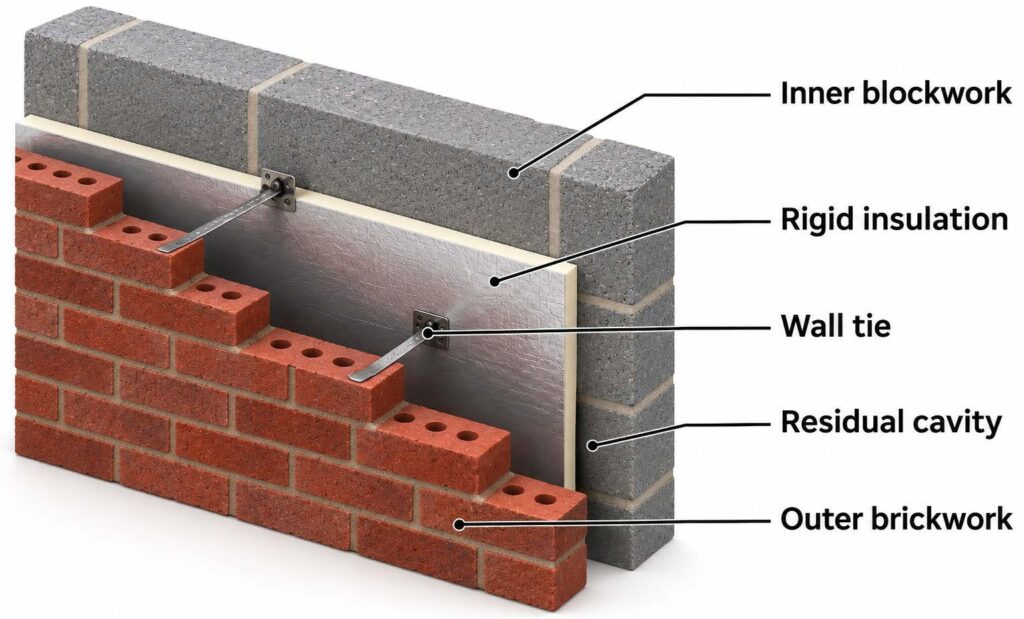
Brick outer leaf, cavity and blockwork inner leaf, joined by a wall tie.
Facing-brick outer leaf, blockwork inner leaf, a cavity between, joined by wall ties.
Fix to: profile clamps through the brickwork, and a top clamp on the masonry. See step 4
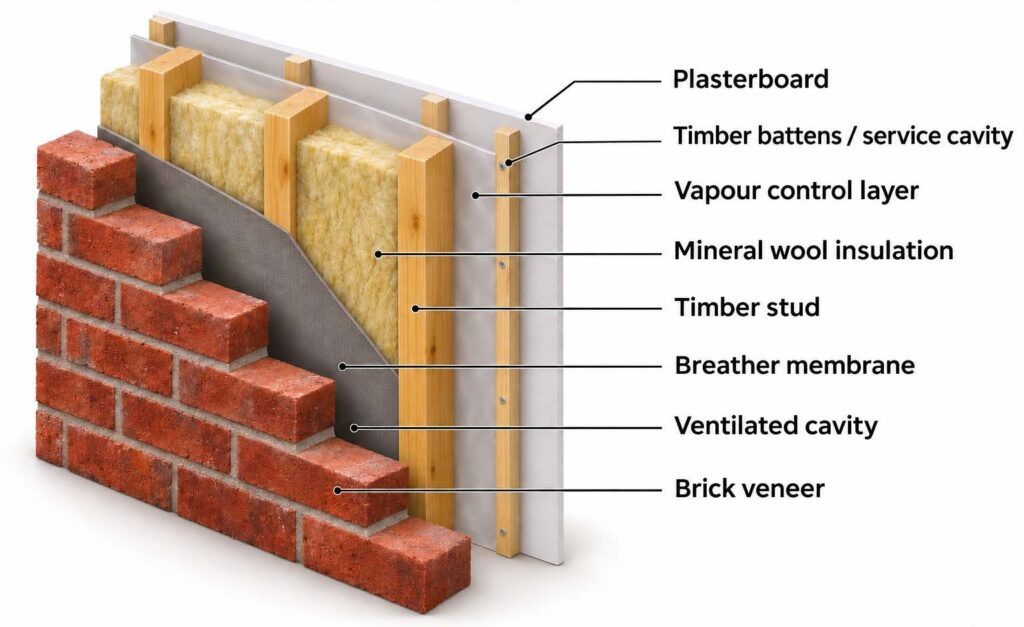
Brick right through.
Brick right through, or two brick leaves — older houses, garden and boundary walls.
Fix to: as above. See step 4
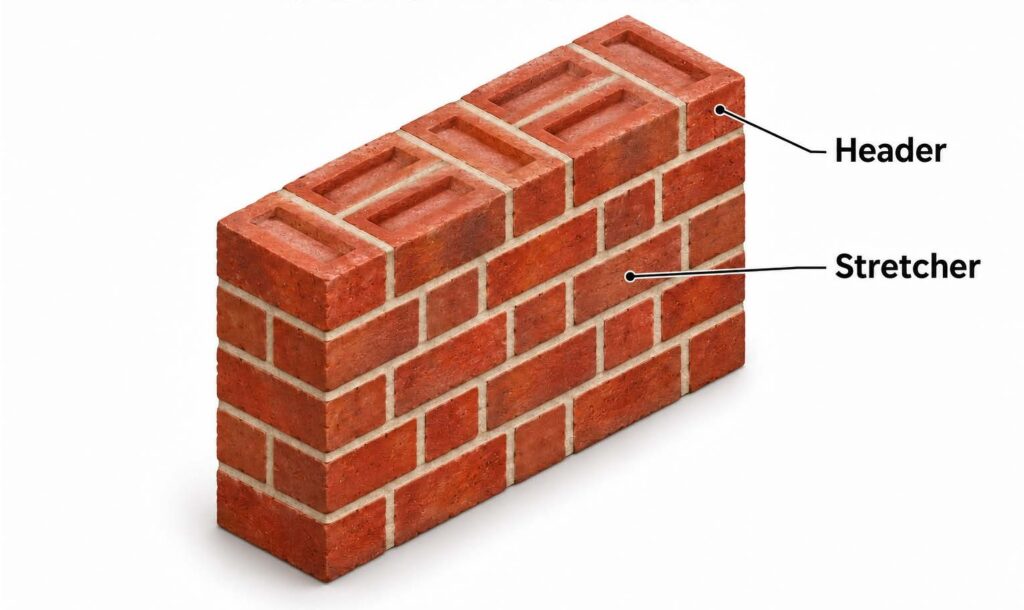
Brick outer leaf, cavity and timber frame.
The frame goes up first; the brick outer leaf is built against it and tied back to the frame.
Fix to: a top clamp nailed to the frame, and profile clamps through the brickwork. See step 5
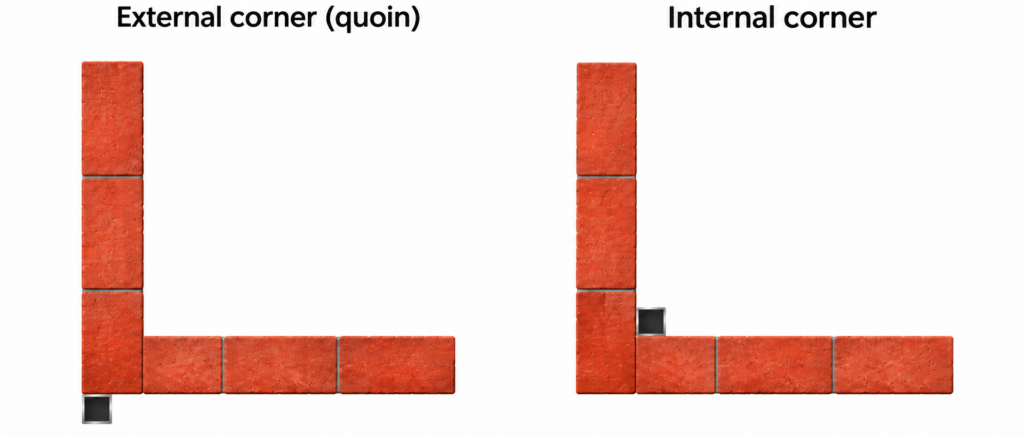
Seen from above. The yellow square is the profile.
The outside corner of a building, where both faces show. Hold the profile with External Profile Clamps.
Where two walls meet on the inside of an angle. Lower down, use Internal Profile Clamps.
At the top of the profile it doesn’t matter: BT top clamps work on internal and external corners alike.